
Lake Michigan’s Public-Private Beach Debate: What’s Really at Stake?
The shoreline along Lake Michigan has long been a cherished natural resource for residents and visitors alike. In Shorewood, Wisconsin, the issue of who truly owns the beach is as tangled as it is thought-provoking. Recent events have highlighted a controversial confrontation between a local homeowner and a long-time professor, raising questions about public rights, private privileges, and the role of local regulations in protecting our treasured lakeshore.
At the heart of the matter is a famous legal quirk: while Wisconsin law acknowledges that the beach belongs to the public up to the Ordinary High Water Mark, it also allows adjacent private property owners to have “exclusive” use of that public space. This creates a situation where a public asset can be monopolized during low-water years, leading to a clash between private interests and community rights. The unfolding drama in Shorewood is a prime example of how tricky parts of legislation and local interpretation can set the stage for heated disputes over natural resources.
Understanding Shoreline Ownership under Wisconsin Law
Wisconsin’s shoreline law is filled with subtle details that can leave even legal experts scratching their heads. Unlike neighboring states such as Indiana and Michigan, where public access to the waterfront is more clearly defined, Wisconsin law purposely assigns exclusive rights to private homeowners adjacent to the lake. This nuance creates a series of confusing bits that continuously emerge, particularly when low water levels expose large expanses of what was once underwater.
Legal History and the 1923 Supreme Court Ruling
A landmark ruling by the Wisconsin Supreme Court in 1923 laid the groundwork for today’s controversies. The decision stated that while the public owns the lakebed, beachcombers are permitted to walk along the shoreline provided they remain in contact with the water—if only by keeping their feet wet. This ruling, which many consider outdated in today’s context, has allowed generations of residents to enjoy the beaches while also giving a legal loophole to certain property owners who claim an unspoken, exclusive right to a slice of Lake Michigan.
This legal backdrop has created many a tricky scenario, including cases where homeowners have developed elaborate compounds that extend their exclusive control over areas that might otherwise be considered public. When water levels drop, what many see as a public lakebed suddenly becomes private beach, leading to tangles of dispute and heated confrontations.
An At-A-Glance Comparison: Wisconsin Versus Neighbors
| Aspect | Wisconsin | Indiana & Michigan |
|---|---|---|
| Ownership of Shoreline | Public up to the OHWM but with exclusive use granted to adjacent property owners | Public with broader pedestrian access rights |
| Public Access | Allowed only if visitors remain in the water | Unrestricted walking paths along the shoreline |
| Legal Precedents | Based on a 1923 ruling permitting minimal public use | More modern interpretations favor public use |
| Impact of Low Water Levels | Expands the area recognized as private beach | Maintains public access regardless of water levels |
This table highlights some of the subtle yet significant differences that have fueled public outrage and a demand for more equitable regulations. Many ask, “Why should one property owner have the luxury of exclusive access when thousands seek a quiet walk by the water?”
The Tussle Between Individual Rights and Community Access
In Shorewood, the controversy has moved beyond legal theory and into everyday interactions. Social media platforms have been abuzz with local residents sharing firsthand observations and stories of conflict. One Reddit post humorously recounted how a resident abruptly ended his swim after an individual in a small black raft loudly declared, “This is a historical site. You can’t be here!” Such anecdotes have added an element of community indignation to an already nerve-racking dispute.
Community Voices and Social Media Outcries
Public opinion is divided, but many community members believe that the beach should remain accessible to everyone. The sentiment is clear: the water and sandy shore are not private parcels of land that can be fenced off or reserved solely for a select few. When focused messages emerge on platforms like Reddit, they provide a snapshot of widespread frustration about a system perceived as loaded with problems in its execution.
Local residents have used colorful language and pointed examples to demonstrate that the current approach to shoreline regulation seems off-putting and overly complicated. They argue that the rights enjoyed by a single homeowner represent a betrayal of public trust when a natural resource of such communal value is rendered inaccessible during a significant portion of the year.
Bulleted List of Community Concerns
- Exclusivity vs. Public Benefit: Many claim that allowing a private party exclusive use of a public beach undermines community rights.
- Environmental Responsibility: Exposure of vast sandy areas during low-water years means that the ecosystem could be negatively impacted by unregulated development.
- Aesthetic and Social Value: The dramatic contrast between a towering private compound and the natural beauty of the shoreline can generate feelings of alienation and inequality among local residents.
- Legal Ambiguity: The existing law, laden with confusing bits and tricky parts, makes enforcement a tangled issue that often leaves all parties feeling unsatisfied.
The Homeowner’s Unusual Shorefront Compound: A Closer Look
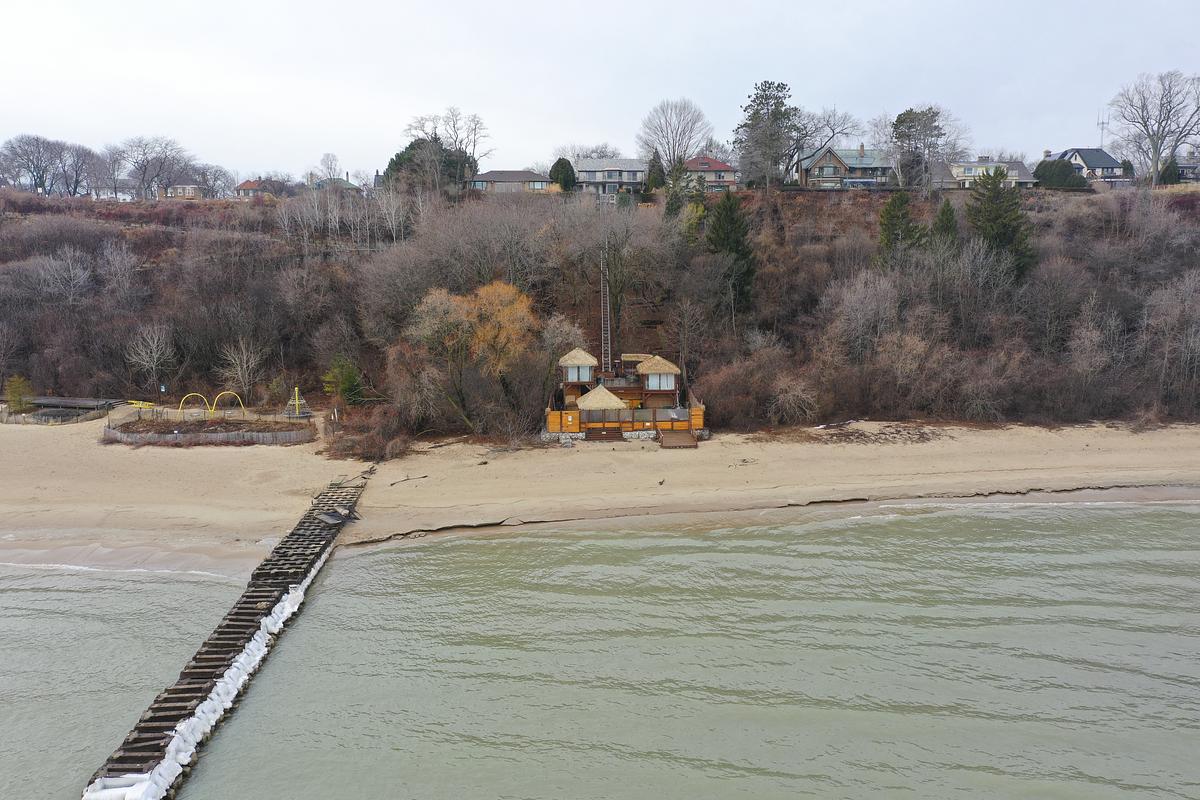
The focal point of the current controversy is Daniel Domagala’s unique beachfront property. Unlike typical dwellings along Lake Michigan, Domagala’s residence is an architectural oddity featuring multiple huts and an expansive deck that descends dramatically to the water’s edge. This compound, reminiscent of a set from a vintage TV show, has been a subject of much debate among locals.
Architectural Ambitions or Overreach?
Domagala’s compound, with its tiki huts, cable car system, and boat launch, has been described by some as a homemade Margaritaville—a playful yet provocative statement about individuality and personal luxury. However, not everyone sees it this way. Many community members argue that the structure goes too far, encroaching upon space that should remain accessible, particularly when it comes to public safety and environmental impact.
Critics have pointed out that while most shoreline properties undergo rigorous review by local planning commissions, Domagala’s development may have sidestepped some of these essential checks. This has only added to the growing resentment among those who believe that architectural embellishments on public land require stricter oversight to ensure they do not impinge on the community’s ability to enjoy natural resources.
Timeline of Shoreline Modifications and Controversies
Examining the timeline of events and modifications to the property reveals a series of small twists and turns:
- 2015: The initial approval for building a fence and a covered patio on the beach near Domagala’s property.
- 2018: Notification by the village that a cabin was out of compliance due to unapproved plumbing fixtures.
- 2020: Complaints about a boat ramp constructed too close to the designated public boundary and subsequent actions by state and local officials regarding erosion controls.
Each phase of development has added another layer to the debate, illustrating that every decision, no matter how small, plays into the larger picture of public versus private rights. The process has been nerve-racking for all involved, with every new modification prompting fresh reviews and criticisms from both government bodies and community members.
Legal Maneuvering: The Professor’s Challenge to the System
In a dramatic twist, Paul Florsheim, a 66-year-old psychologist and University of Wisconsin-Milwaukee professor, has taken it upon himself to challenge the status quo. Having grown up in a time when the beach was considered a public right of way, Florsheim is determined to restore what he sees as a lost tradition of community access.
A Walk on the Public Side
Earlier this summer, Florsheim decided to put his beliefs into action by walking from Atwater Park—where public beach access is visibly marked—over a concrete barrier into the disputed area adjacent to Domagala’s compound. Despite warnings and ultimately receiving a $313 citation for trespassing, the professor’s actions have ignited a broader discussion about the balance between private property rights and public ownership of natural resources.
Florsheim’s protest is not merely an isolated incident; it reflects a broader struggle that many see as characterizing Wisconsin’s shoreline policies. His impassioned argument is that the Ordinary High Water Mark should act as a true dividing line between public and private use—a slight difference that he insists is key to ensuring everyone has a fair chance to enjoy the beauty of Lake Michigan.
Key Points from Florsheim’s Court Testimony
During his appearance in Shorewood Municipal Court, Florsheim made several critical points that summarize his position:
- Historical Understanding: Citing memories of a time when beaches were natural extensions of public space, he highlighted a generational shift in expectations.
- Legal Interpretation: He argued that the signs posted at the edge of Atwater Park misleadingly declare private property, when, by law, the area should be open to the public.
- Future Implications: Florsheim warned that a favorable ruling on his challenge could pave the way for thousands of acres of Wisconsin’s shoreline to become accessible for public strolls during low-water years.
Though the court’s decision is still pending, Florsheim’s clearly articulated stance has already resonated with many residents, who feel that his effort is a necessary step in addressing the tangled issues posed by outdated legal interpretations.
Implications for Public Access: A Vision for the Future
The outcome of this dispute could have far-reaching implications not only for Shorewood but also for the entire state along its 800 miles of Great Lakes shoreline. A favorable ruling for Florsheim could force local lawmakers and state officials to revisit the legal framework that governs shoreline access. In an era where natural resources are increasingly seen as communal assets rather than individual privileges, his challenge may set a precedent for broader reforms.
Potential Benefits to the Community
If the legal scales tip in favor of public access, several positive outcomes could emerge:
- Enhanced Recreational Opportunities: Residents and visitors alike could enjoy leisurely walks along the beach without fear of trespassing citations.
- Environmental Stewardship: With public oversight, development along the shoreline might be better regulated, allowing for more responsible and sustainable practices that protect the lake’s ecosystem.
- Social Equity: Opening up previously restricted areas would help ensure that everyone has the opportunity to experience the natural splendor of Lake Michigan, regardless of socioeconomic status.
The Role of State and Local Regulators in Shaping Access
Wisconsin’s regulatory framework governing shoreline access has long been a source of debate. State officials, local planning departments, and even the Department of Natural Resources have all played a role in shaping how the law is applied on the ground. For instance, there have been instances where local agencies stepped in to modify structures that overstepped the boundaries of permitted development. These actions illustrate that while the law may be full of problems, there is still room for thoughtful, measured action when it comes to preserving public interests.
In recent years, enforcement has relied largely on public complaints rather than proactive measures, leading to a sort of ‘wait and see’ approach. This reactive stance means that many ambiguities in the law remain unaddressed until a conflict arises. In the case of Shorewood, each new modification on the beachfront adds another complicated piece to the ongoing puzzle, leaving the community to question if these issues will ever be resolved in a way that benefits everyone.
Sorting Out the Future: Working Through a Tense Situation
The current standoff in Shorewood is a microcosm of broader debates about public land access across the Great Lakes region. The situation is tense, as both sides remain firmly entrenched in their beliefs about property rights and communal benefits. The legal tussle has exposed the nerve-racking reality that outdated laws can lead to unintended consequences, where private interests hinder public enjoyment of natural treasures.
Steps Toward a More Equitable Shoreline
Addressing this multifaceted problem will require hard, honest conversations and creative policy solutions. Some possible steps include:
- Reevaluating Historic Rulings: Legislators could consider updating or revising the 1923 ruling to better reflect today’s values and societal expectations regarding public spaces.
- Defining the Ordinary High Water Mark: Clearly delineating this critical boundary using modern technology and environmental studies could help resolve many of the small distinctions that lead to disputes.
- Community-Based Management: Engaging local groups in discussions about shoreline management may provide a more balanced approach that weighs both private aspirations and community needs equally.
Challenges and Opportunities in Policy Reform
Any attempt to reform shoreline access laws is sure to be met with both resistance and support. On one hand, property owners fear that loosening exclusive rights could devalue their investments; on the other, community advocates stress that public access to natural resources is a key element of fair, social living. This gives rise to several tricky parts, such as:
- Balancing Interests: Achieving a compromise between private property rights and public enjoyment of the lakeshore is a delicate balancing act.
- Implementation Hurdles: Changing well-entrenched legal interpretations and local practices is a daunting, sometimes overwhelming task that requires both political will and community consensus.
- Economic Considerations: Shorefront property can be highly valuable, and any shifts in legal access have direct financial implications, adding another layer of confusing bits to the debate.
The hope is that, in time, the lessons learned from Shorewood’s current controversy will lead to a more transparent, community-centered approach to managing shoreline assets. Reform advocates suggest that modernizing the regulations while preserving key aspects of environmental conservation could prove to be a super important step forward in ensuring that Lake Michigan remains a public good for all.
A Call for Inclusive Dialogue and Forward-Looking Solutions
What we are witnessing in Shorewood is more than a mere legal duel; it is a reflection of the ongoing struggle to reconcile individual freedoms with community respect for shared spaces. The quiet clamor for change has been building over the years, and as more residents speak out, there seems to be a growing consensus for change. People from various backgrounds, from local residents to environmental advocates, are calling for a future where the lakeshore is a place for everyone.
Avenues for Community Involvement
One promising avenue is to foster a more inclusive dialogue around shoreline policy. Local governments could host town hall meetings, where residents, property owners, and experts come together to get into the nitty-gritty of what a fair and balanced shoreline policy might look like. Such discussions can help uncover hidden complexities in the current system and encourage creative solutions, including:
- Establishing clear, community-endorsed guidelines regarding permissible construction near the water.
- Introducing measures that ensure public access remains, even during extended periods of low water levels.
- Collaborating with environmental scientists to develop sustainable models that both protect the ecosystem and honor historical public rights.
The idea is not to vilify anyone, but rather to encourage a balanced approach that takes into account the fine points of individual property rights while prioritizing community welfare. Working through these tangled issues might well be nerve-racking, but it is a necessary step in finding a path forward that benefits all stakeholders.
The Role of Media and Public Opinion
Media coverage plays a critical role in shaping the discussion. Journalists and opinion writers have the power to highlight small distinctions and subtle parts of the debate that might otherwise be obscured by politicized rhetoric. By presenting objective, well-researched analyses, the media can help the public figure a path through the maze of regulations and personal interests.
In this spirit, it is essential that our local news outlets continue to poke around, dive in, and bring these issues into the light. Doing so not only informs the community but also keeps public officials on their toes, ensuring that the interests of the many are not sacrificed on the altar of private gain.
Finding Common Ground on the Shoreline
The Shorewood debacle underscores a broader theme seen throughout many communities across America: the ongoing struggle to balance rapid development and economic interests with the preservation of natural resources and public spaces. The dense mesh of private rights interwoven with public ownership demands that we take a closer look at the values that underlie our legal and cultural attitudes toward nature.
Bridging the Gap Between Private Interests and Community Rights
One potential way to bridge the gap is to encourage voluntary agreements between property owners and local governments. Such arrangements could be designed to ensure that while homeowners retain certain exclusive rights, there remains a guaranteed public corridor for those looking to take a relaxing walk along the edge of Lake Michigan. For example, a shared-use easement might allow the public to enjoy the shoreline while still providing homeowners with a sense of privacy and security.
This approach has several key advantages:
- Preservation of Public Assets: It guarantees that public access to the lake remains a priority.
- Legal Clarity: Both parties benefit from clear boundaries and mutually agreed-upon rules, reducing the occurrence of disputes.
- Environmental Protection: Collaborative management can lead to better preservation and maintenance of the natural habitat along the shoreline.
Opportunities for Legislative Change
Beyond local negotiations, there is also an opportunity for legislative reform at the state level. Lawmakers could take inspiration from neighboring states by introducing measures that clearly define public shoreline rights. Amendments to the existing statutes may involve:
- Redefining the precise boundaries of public and private access in more contemporary terms.
- Ensuring that any development in close proximity to the water meets strict environmental standards.
- Establishing a state oversight committee specifically tasked with reviewing and adjudicating disputes over shore access.
While these ideas might seem intimidating at first, they represent a necessary evolution in our understanding and management of a natural resource that has long been central to community identity. They also serve as a reminder that, in a democracy, public spaces must be tended to with the same care and attention as any other public asset.
Conclusion: Toward a More Inclusive Shoreline Future
The public-private beach debate in Shorewood is emblematic of broader challenges facing communities along Lake Michigan and beyond. As residents, local governments, and legal experts grapple with the tangled issues and subtle details of shoreline management, one thing remains clear: the need for a more inclusive and modern approach that respects both private rights and public access.
While the current legal framework has served its purpose for nearly a century, changing environmental and social landscapes call for an update. Whether through local negotiations, innovative shared-use agreements, or broader legislative reforms, there is considerable potential to find a solution that honors the historical importance of public access while accommodating the legitimate interests of property owners.
This debate is not solely about one professor’s sidewalk protest or one homeowner’s elaborate beachfront compound; it is about the future of a natural treasure that is as sacred in its beauty as it is in its cultural significance. As we work through the tricky parts and tangled issues that arise from these legal twists and turns, let us do so with an eye toward fairness, sustainability, and a respect for the communal rights that have long defined the public lands we cherish.
By embracing open dialogue, carefully considering the environmental impact, and seeking common ground between individual ambitions and collective needs, we can ensure that Lake Michigan remains a vibrant, accessible resource for generations to come. It is through this shared vision that Shorewood—and communities across the Great Lakes region—can hope to find their way through the maze of confusing bits and nerve-racking legal battles, emerging with a shoreline that truly belongs to us all.
Originally Post From https://urbanmilwaukee.com/2026/01/09/shorewood-beach-showdown-tests-who-owns-lake-michigans-sand/
Read more about this topic at
Wisconsin man hopes his $313 ticket will reshape Lake …
Shorewood beach dispute tests public access to Lake …

