The Renaming of a Great Lake: A Bold Rebranding or a Symbolic Trade Battle?
In a move that has both baffled and intrigued many, former President Donald Trump has ordered a dramatic renaming of one of the world’s largest freshwater lakes. With a swift stroke of his pen, the lake formerly known as Lake Ontario will be called “Lake America.” This decision is not simply a change in nomenclature but rather a strategic gesture loaded with political symbolism and wrapped in the ongoing trade dispute with Canada.
As the controversy unfolds, the renaming order has sparked debates among political observers, economists, and historians. It is a classic example of how high-stakes politics can turn even nature’s landmarks into a canvas for aggressive branding. In this opinion editorial, we explore the origins of this decision, its connection to a broader economic conflict, and what it reveals about American politics in today’s turbulent global climate.
Setting the Stage: A Look Back at the Renaming Directive
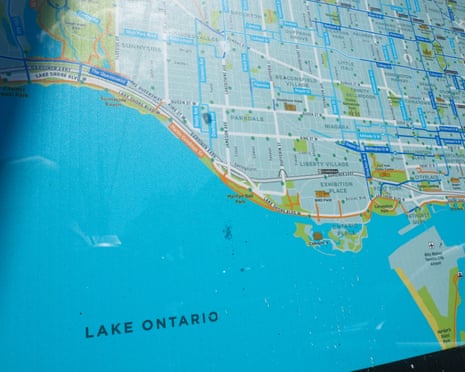
Late in August, as tensions between the United States and Canada reached new heights due to trade disputes, Trump made a public declaration. Standing before a large map emblazoned with the words “LAKE AMERICA” in bright red, he proclaimed that effective immediately, the federal government was to update all official records, maps, and documents to reflect the new name. This dramatic rebranding move is part of a larger series of efforts by Trump’s administration to imprint his legacy on America’s landmarks, a tactic that many see as both bold and controversial.
The order directs the Interior Secretary and the U.S. Board on Geographic Names to replace every federal reference to “Lake Ontario” with “Lake America.” However, while the executive order has administrative force in reshaping official records, its symbolic power over the hearts and minds of the citizens—and indeed, over international opinion—remains a different matter.
The Political Theater: Trade Wars and Territorial Branding
One cannot separate the renaming incident from the broader economic tensions between the United States and Canada. The move arrived on the heels of a trade war where the U.S. imposed 50% tariffs on billions of dollars’ worth of Canadian goods. In response, Canada mobilized its defenses, preparing matching tariffs on a wide array of American products. The renaming decision, therefore, appears to be as much about setting a defiant tone in the trade war as it is about asserting American identity.
Below is a summary of some of the key steps in the escalating economic confrontation:
- Tariff Implications: The U.S. imposed tariffs on Canadian imports worth billions of dollars, citing unfair trade practices.
- Immediate Retaliation: Canada responded with tariffs on American goods, ranging from 15% to 50% on steel, dairy, agricultural equipment, and more.
- Branding Tactics: Trademarks such as “Lake America” and earlier efforts like renaming the Gulf of Mexico to the “Gulf of America” were unveiled as part of a coordinated branding campaign.
This rebranding strategy is reminiscent of battles over trade branding, where the names used for natural landmarks, products, and even policies become part of a larger narrative. For Trump and his administration, the renaming is more than a symbolic renaming—it’s a declaration that America’s interests and pride should be evident even on the maps.
Historical Roots: Understanding Lake Ontario’s Legacy
Lake Ontario is much more than a body of water; it is a historic landmark with geographical, cultural, and social significance. The name “Ontario” is derived from the Wendat word “Ontari’io,” which translates to “the lake is beautiful” or “the lake is big.” This heritage, stretching back centuries before modern national boundaries were even drawn, imbues the name with deep meaning for both Americans and Canadians alike.
The decision to replace such a time-honored name with “Lake America” is seen by many as an attempt to override historical and cultural continuity with a modern political statement. It brings to light some of the more tangled issues that arise when national pride and branding intersect with history. Let’s consider the following table that highlights the differences between the old and new names:
| Aspect | Lake Ontario | Lake America |
|---|---|---|
| Historical Significance | Derived from indigenous language, reflecting heritage and natural beauty | Newly coined, intended to symbolize patriotic branding |
| Cultural Impact | Resonant with both American and Canadian communities | Seen as a unilateral political statement aimed at assertive nationalism |
| Geopolitical Implications | Represents a shared natural resource between countries | Intended to reinforce an “America-first” ideology |
The table above underscores the tangled issues associated with altering a name that carries centuries of meaning and communal memory. This change is not just an administrative update but a profound symbolic gesture aimed at asserting national pride amid an ongoing international dispute.
Borderland Branding and the Tug-of-War Over National Identity
Trump’s rebranding of Lake Ontario to Lake America is emblematic of a broader strategy where political leaders take bold, sometimes polarizing, steps to assert national identity. When a president actively alters the official names of natural landmarks, the implications go beyond surface-level politics. It creates an environment where every decision is loaded with the mission to broadcast a specific message to both domestic and international audiences.
This aggressive approach to rebranding is both interesting and divisive. Supporters argue that it is a necessary act to remind citizens and foreign governments alike of the enduring strength and unique identity of the United States. Opponents, however, contend that such changes are nothing more than a publicity stunt—one that ignores the inherent, intricate history of the landmarks involved.
These bold moves have elicited mixed responses. Internationally, figures like Canadian Prime Minister Mark Carney have decried the decision, emphasizing that Lake Ontario’s historical roots and cultural significance far outweigh any modern rebranding effort. Carney’s criticism encapsulates the fine points of this debate: Should nature’s landmarks be subject to the shifting winds of political agendas, or should their names remain as enduring legacies of the past?
Economic Tensions: When Trade Wars Fuel National Branding
The renaming of the lake at a time when the trade war between the United States and Canada escalates cannot be seen in isolation. The economic conflict stands as a backdrop—and arguably, a motive—for the branding changes. With tariffs mounting on both sides of the border, the decision to rename Lake Ontario to Lake America is interwoven with the intricate twists and turns of the current economic struggle.
Economic tensions of this nature tend to spill over into other areas of public life, including cultural and geographical nomenclature. Here are several key points that capture the economic pressures influencing the decision:
- Unsettled Trade Relations: The imposition of significant tariffs by the U.S. on Canadian goods has strained the economic ties that once underpinned decades of mutual cooperation.
- Response Mechanisms: With Canada adopting a counter-tariff policy on American imports, every decision by the U.S. government is seen as a potential leverage point in the negotiations.
- Symbolic Gestures: Beyond economics, renaming natural landmarks like Lake Ontario acts as a psychological tactic meant to signal strength and resolve.
Through these measures, Trump’s administration appears to be combining economic strategies with symbolic actions, using soft power to influence perceptions both domestically and abroad. The mixing of economic firepower with cultural rebranding represents an innovative—but also potentially risky—approach to modern geopolitics.
Repercussions for Bilateral Relations: A Lesson in Diplomatic Dance
The renaming issue has sparked intense debate over bilateral relations between America and Canada—two nations historically linked by strong economic, cultural, and political ties. While Trump’s proclamations signal an “America-first” approach, they also create a rift that complicates decades-old friendships and alliances.
Critics argue that the sheer boldness of the act might backfire, breeding resentment among Canadians who view this as an encroachment on their own cultural heritage. Canadian leaders have been vocal in defending the name Lake Ontario, emphasizing that the long-standing designation reflects a shared history between the two countries. The following points highlight how this naming controversy is affecting diplomatic interactions:
- Historical Grievances: The new name disregards centuries of shared cultural and historical bonds.
- Mixed Messaging: While the U.S. administration purports to be celebrating American achievements, the method might be interpreted as aggressive and unilateral.
- Diplomatic Strains: The dispute over Lake America introduces an additional wrinkle in trade negotiations already loaded with tension.
The diplomatic fallout from this rebranding effort forces us to take a closer look at the delicate balance that has long characterized U.S.-Canada relations. It raises the question: How far can one country go in redefining shared symbols before the scales tip toward hostility and diminished cooperation?
Exploring the Domestic Response: Patriotism Versus Practicality
Within the United States, reactions to the new name have been as polarized as the political divide itself. Many supporters of the former president view the renaming as a super important assertion of American pride. For them, “Lake America” symbolizes a fresh start—a reclaiming of national identity in an era where America’s stature on the global stage is being redefined. They see the move as a fitting tribute to the nation’s ideals, boldly challenging international agreements that, in their view, have historically disadvantaged the United States.
On the other side of the debate, critics argue that such symbolic gestures, while attention-grabbing, may prove to be more of a distraction than a solution. They contend that genuine improvements in international trade relations require more than mere name changes; they demand concrete policies that address the underlying, and sometimes nerve-racking, economic issues. These critics caution that branding battles over natural landmarks are just superficial fixes that fail to resolve the complicated pieces associated with global trade and diplomatic relations.
Thus, the domestic debate on renaming honors the broader discussion about how symbols and identity intersect with policy. When tackling issues as multifaceted as trade wars, it is essential to work through the hidden complexities of international economics rather than relying solely on catchy slogans and rebranded geographical markers.
Historical Parallels: When Geographic Names Became a Battleground
This is not the first time that political leaders have attempted to reshape geographic names to suit contemporary narratives. History is replete with examples where names of lands, cities, and natural features were changed to reflect emerging identities or to make a clear political statement. For instance, the transformation of city names after decolonization in Africa and Asia serves as a vivid example of how names can hold powerful meanings in defining national narratives.
In comparing these acts to the current scenario, several interesting parallels and contrasts emerge:
- Colonial Renaming Versus Modern Rebranding: Historically, renaming places was often a method of erasing colonial legacies. Today, it is being wielded as a political tool to reiterate a nationalistic stance amid international disputes.
- Community Sentiments: Past renamings have often been met with resistance from local populations. Similarly, many citizens on both sides of the U.S.-Canada border have expressed concerns about erasing centuries-old cultural identities.
- International Repercussions: While historical instances of renaming led to significant debates and adjustments, the modern world’s interconnected nature means that such changes reverberate instantly through global media and diplomatic channels.
These historical parallels remind us that renaming is never just an administrative act. Every name carries a story—a collection of little details and subtle parts that reflect the people, traditions, and shared memories of an entire region.
The Impact on Local Communities: More Than Just a Name
While most of the focus on renaming has been on national symbolism and global politics, the effects on local communities living along Lake Ontario must not be overlooked. For many residents, the lake is a cornerstone of local culture, recreation, and economic activity. Changing its name could disrupt local identity and create confusion in everyday affairs, from tourism marketing to recreational signage.
Local stakeholders have voiced their concerns regarding:
- Community Identity: The lake’s historical name has fostered a sense of belonging and continuity among residents who have passed down stories and traditions for generations.
- Economic Impact: Tourism, which thrives on the rich, historical allure of Lake Ontario, may need to reinvent its branding and storytelling to adapt to the new nomenclature.
- Administrative Burden: Changing maps, educational materials, and public records is a task filled with tricky parts and tangled issues, which may prove to be intimidating and off-putting for local administrations.
For local business owners and community leaders, the debate surrounding the renaming is not just a distant political conflict—it is an issue that directly affects the fabric of everyday life. They must now figure a path through the confusing bits of federal mandates and local sensibilities, weighing the legacy of a historical name against the backdrop of an aggressive nationalistic agenda.
Media Coverage: Understanding the Role of Public Perception
The renaming initiative has not only dominated political headlines but has also captured the interest of the media and public on social platforms. In today’s digital age, the way a story is covered can often determine its legacy. With images of a boldly printed “LAKE AMERICA” dominating news outlets and social media feeds, the narrative is being shaped as much by visuals as by words.
Media analysts note several key aspects in how this story is being portrayed:
- Visual Impact: The striking red lettering on maps has provided a powerful visual symbol of American assertiveness, sparking both admiration and ridicule.
- Controversial Editorials: Opinion pieces on both sides of the political spectrum have fueled debates by highlighting the hidden complexities of such symbolic acts.
- Social Media Backlash and Support: Fast-moving discussions on platforms like X (formerly Twitter), Facebook, and Instagram have allowed citizens to voice their opinions—ranging from passionate endorsements of American pride to sharp criticisms of what many see as a superficial distraction from more pressing economic issues.
By dissecting media coverage, it becomes clear that the renaming of Lake Ontario is not just about geographic identity—it is a case study in how symbolic gestures are amplified in the digital age. Every tweet, headline, and image contributes to a narrative that is as much about national pride as it is about the fine shades of international diplomacy.
Breaking Down the Decision: A Multifaceted Analysis
When analyzing this bold rebranding decision, it is instructive to break down the various factors that have contributed to its emergence. The following bullet points summarize the key arguments and viewpoints:
- Political Branding: The decision is part of a larger agenda aimed at rebranding the nation’s natural and cultural landmarks to reflect an “America-first” policy.
- Trade War Symbolism: The renaming serves as a symbolic weapon in an ongoing economic contest with Canada, designed to assert dominance and control over trade narratives.
- Historical Overwrite: Critics argue that changing a name steeped in indigenous and colonial history undermines the layered, historical legacy embedded in the region.
- Administrative Hurdles: The order to update federal maps and databases involves a series of practical, sometimes nerve-racking, challenges—ranging from bureaucratic resistance to local opposition.
- Media and Public Reaction: Public sentiment is divided, with some viewing the change as a proud assertion of national identity, and others seeing it as little more than a superficial rebranding stunt.
Each of these points underscores the multifaceted nature of this decision and provides insight into why the renaming of Lake Ontario has become a lightning rod for debate in the realms of politics, trade, and culture.
Future Implications: What Lies Ahead for U.S.-Canada Relations?
The current name change could have lasting repercussions for U.S.-Canada relations. With trade negotiations already in a state of disarray, the renaming might further complicate an already tense situation. There are several potential outcomes and future implications to consider:
- Diplomatic Strain: If such symbolic gestures continue, they could lead to more serious strains in diplomatic relations between the two nations.
- Economic Retaliation: As seen with the matching tariffs, decisions based on nationalistic branding might provoke further economic countermeasures, affecting bilateral trade.
- Cultural Reconciliation: Over time, both nations may be forced to return to discussions focusing on shared historical ties and cultural continuity, as opposed to isolated acts of rebranding.
- Legislative and Administrative Changes: The shift in official nomenclature will require sweeping adjustments in federal, state, and local administrative processes—a task that is likely to be both overwhelming and complicated.
Experts suggest that if the current trend of aggressive rebranding continues, we may see further attempts to rename other significant natural landmarks—including suggestions to rebrand major oceans. Whether such moves will be met with widespread public support or fierce diplomatic pushback remains to be seen. The decision to rename Lake Ontario to Lake America might just be the beginning of a new era in which geographic identity becomes a battlefield for ideological and economic conflicts.
The Broader Debate: National Pride Versus Global Cooperation
The controversy over Lake America invites us to take a closer look at the delicate balance between celebrating national pride and maintaining global cooperation. There is no denying that national symbols hold immense power—they unite, inspire, and remind citizens of a common past. However, when these symbols are co-opted as tactical tools in economic disputes, they risk alienating key partners and complicating diplomatic relations.
A few considerations that encapsulate this debate include:
- Community Connection: Public monuments and natural landmarks are cherished parts of collective memory. Their names are not mere labels, but repositories of shared experiences and heritage.
- Symbolic Politics: While symbol-driven policies can energize a political base, they could also oversimplify the very tricky parts of multifaceted international disputes.
- Economic and Cultural Realities: Practical issues such as pricing, trade agreements, and local tourism cannot be fully addressed by rebranding alone.
This tension between inward national pride and outward global collaboration—a narrative born of small distinctions and subtle parts—underscores a broader conversation about what it truly means to be a part of an interconnected world. It forces leaders on both sides of the Atlantic to reconcile their desire for sovereign branding with the necessity of cooperative problem-solving amidst challenging economic dilemmas.
Conclusion: Reflecting on the Power of a Name
The rebranding of Lake Ontario to Lake America is much more than a superficial change. It encapsulates a moment in American political history where nationalistic fervor, economic strategy, and historical identity intermingle. While some see the change as a super important act of patriotism—a bold move meant to reinforce the message that American ingenuity and strength remain unchallenged—others view it as a distraction from the very real, nerve-racking economic challenges they face. By using an iconic natural feature as a battleground for ideological expression, the decision has transformed a centuries-old landmark into a symbol of a modern political struggle.
As the controversy continues to develop, the true measure of this act’s impact will lie in its long-term effects on U.S.-Canada relations, local community identity, and the broader international narrative. Will future generations adopt “Lake America” with pride, or will they look back on this moment as a curious episode in a time when political branding took center stage in the fight for trade and national identity? Only time will tell.
In closing, one must appreciate that geographic names are not just words on a map. They are living testaments to the history, culture, and values of the people who inhabit the regions. Changing such a name is akin to rewriting a piece of that community’s story—a story built on generations of shared memories, collective struggle, and triumph. As debates rage on and the economic and political landscapes continue to evolve, it remains critical to remember that while symbols can be rebranded and names can be changed, the underlying realities of human experience, community, and history continue to endure.
Whether viewed as an act of national pride or as an example of an overly aggressive rebranding strategy, the move to rename Lake Ontario serves as a reminder of the delicate balance between patriotism and pragmatism. It is a vivid illustration of how, even in the realm of natural landmarks, the journey of national identity can be fraught with challenges, tangled issues, and a myriad of fine, historical details that refuse to be forgotten.
For observers of modern politics and global trade, the renaming of Lake Ontario may well stand as one of the more striking symbols of an era marked by bold declarations, heated trade wars, and the ever-present ambition to leave an indelible mark on the fabric of a nation. As the U.S. and Canada navigate these turbulent waters, one hopes that both sides can find a path that honors history while embracing a future built on cooperation, mutual respect, and a willingness to address those overwhelming challenges with practical, concrete solutions.
The debate over Lake America is far from settled. As discussions continue in boardrooms, government offices, and community centers, it remains clear that this is not simply about renaming a lake—it is about navigating the twists and turns of modern geopolitics, reconciling economic realities with cultural legacies, and ultimately, ensuring that while names may change, the spirit of community and shared history endures.
In a world where every decision is laden with hidden complexities and every name carries the weight of tradition and identity, the lake formerly known as Ontario now stands as a powerful symbol of an America that longs to assert its presence on the global stage. If future policy decisions continue to emphasize branding over dialogue, one can only hope that cooler heads will eventually prevail and that the enduring beauty of landmarks—be they named Lake Ontario or Lake America—will continue to inspire all who behold them.
In conclusion, whether one views the renaming as a clever political maneuver or as an unnecessary diversion from more pressing international concerns, it undeniably highlights the uniquely American tendency to cast even the tranquility of nature into the realm of high-stakes politics. As the story of Lake America unfolds, it serves as a reminder that in modern governance, even the names of natural wonders can become the battlegrounds where ideology, economics, and identity converge.
Originally Post From https://www.washingtoninformer.com/trump-renames-lake-ontario-america/
Read more about this topic at
Trump signs executive order renaming Lake Ontario
Trump floats renaming Lake Ontario ‘Lake America’ amid …